
Pet Microchipping in Dedham, MA
Every year, millions of pets become lost — and without permanent identification, many never find their way home. A microchip is the most reliable, permanent form of ID your pet can have. At Castlerock Veterinary Hospital in Dedham, MA, we offer quick, safe microchipping for dogs and cats of all ages. The procedure takes just seconds and could make all the difference if your pet is ever lost or separated from you. Call (781) 329-5333 to add microchipping to your pet’s next visit.
What Is a Pet Microchip and How Does It Work?
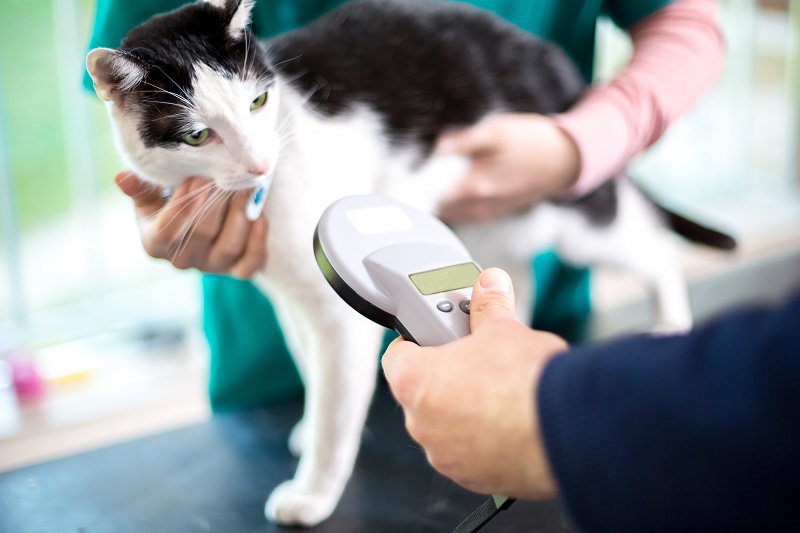
A microchip is a tiny electronic device — roughly the size of a grain of rice — that is injected under your pet’s skin, typically between the shoulder blades. Each chip contains a unique identification number that is linked to your contact information in a national pet recovery database. When a lost pet is found and brought to a shelter, veterinary office, or animal control facility, a handheld scanner is used to detect the chip and read the ID number, which can then be used to look up the registered owner’s information and facilitate a reunion.
Unlike collars and ID tags, which can break, fall off, or be removed, a microchip stays with your pet permanently. It is not a GPS tracker — it does not transmit location — but it provides a critical link between a lost pet and their owner once the animal is found. Microchipping is widely recommended as a standard component of responsible pet ownership and is required for international travel to most countries.
The Microchipping Procedure
The microchipping procedure at Castlerock Veterinary Hospital is fast, simple, and minimally invasive. Using a hypodermic needle similar to those used for routine vaccinations, our veterinarian or veterinary technician injects the chip just beneath the skin. Most pets experience no more discomfort than a standard vaccine injection, and the entire process takes only a few seconds. No anesthesia is required, and there is no recovery time — your pet can resume normal activity immediately after the procedure.
Microchipping can be performed as a standalone appointment or added to any other visit, including wellness exams, puppy and kitten visits, or even during spay/neuter surgery while your pet is already anesthetized.
Registering Your Pet’s Microchip
The microchip itself is only useful if it is registered in a searchable database with your current contact information. After the chip is implanted, you will receive the chip ID number and registration instructions. It is important to register promptly and to update your information any time your address or phone number changes. Without current registration, a chip cannot help reunite you with your lost pet.
We recommend periodically asking your veterinarian to scan your pet’s chip during routine wellness visits to confirm the chip is still detectable and functioning. For international travelers, be sure your pet’s chip is ISO 15693 or ISO 11784/11785 compliant, as some countries require a specific chip standard. Contact Castlerock Veterinary Hospital at (781) 329-5333 to schedule your pet’s microchipping appointment today.
Frequently Asked Questions — Pet Microchipping
Does microchipping hurt my pet?
The procedure causes minimal discomfort — comparable to a standard vaccine injection. No anesthesia is required, and most pets tolerate the procedure without distress. The chip is implanted using a hypodermic needle and takes only seconds. Your pet can return to normal activity immediately afterward.
What happens when a lost pet with a microchip is found?
When a lost pet is brought to a shelter, veterinary clinic, or animal control facility, staff will scan for a microchip using a handheld reader. If a chip is found, the ID number is looked up in a national registry to retrieve the owner’s contact information. The owner is then contacted so the pet can be returned home.
Is a microchip a GPS tracker?
No. A microchip is a passive RFID device — it does not transmit signals or track your pet’s location. It only provides an ID number when scanned. Microchips are a permanent form of identification, not a real-time tracking system. For GPS tracking, there are separate collar-attached devices available through pet retailers.
At what age can I microchip my puppy or kitten?
Pets can be microchipped as early as 8 weeks of age. We recommend having it done during your pet’s first or second puppy or kitten visit. It can also be done at any point during your pet’s life — it’s never too late to microchip a pet who doesn’t yet have one.
Do I need to register my pet’s microchip after implantation?
Yes — registration is essential. The chip itself contains only a number; that number must be linked to your contact information in a national database for the chip to be useful. After your pet is chipped at Castlerock Veterinary Hospital, you will receive the chip ID and instructions for registration. Keep your information current whenever you move or change your phone number.
Is microchipping required for international pet travel?
Most countries require a microchip as a condition of entry, and the chip must typically be implanted before or at the same time as the rabies vaccination for the vaccine to be considered valid under international regulations. If you plan to travel internationally with your pet, ask us about health certificate requirements as well.
How do I schedule microchipping for my pet at Castlerock Veterinary Hospital?
Call us at (781) 329-5333 or request an appointment online. Microchipping can be added to virtually any veterinary visit for your convenience, or scheduled as a brief standalone appointment. We serve pet owners throughout Dedham, MA and surrounding communities.
